
Magnetic Flow Meters
Electromagnetic flow meters operate based on Faraday’s Law of Electromagnetic Induction, which states that a voltage is induced when a conductive fluid flows through a magnetic field. The flow meter consists of a flow tube with electrodes that come into c
Working Principles of Electromagnetic Flow Meters
Electromagnetic flow meters operate based on Faraday’s Law of Electromagnetic Induction, which states that a voltage is induced when a conductive fluid flows through a magnetic field. The flow meter consists of a flow tube with electrodes that come into c
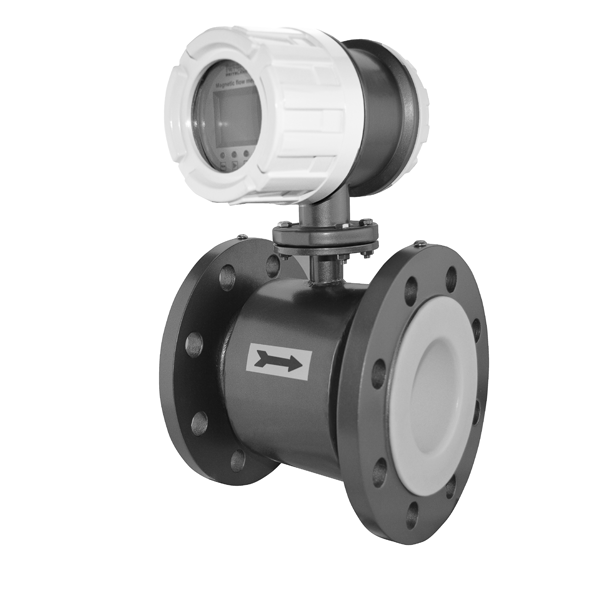
Magnetic Flow Meter for Water and Wastewater (MTF-W)
- No moving parts and low pressure loss help reduce wear in conductive liquid service.
- Bi-directional measurement works well for water, wastewater, slurry and many process liquids.
- Stable output options support monitoring, batching and plant automation integration.
- Material and lining choices can be matched to chemistry, temperature and sanitary needs.
- Accuracy
- Standard: +/-0.5 %, Optional: +/-0.2 %
- Measuring Range
- 1 m3/h to 125000 m3/h
- Medium Temperature Range
- PU: 0 to 140 F (-18 to 60 C); Neoprene: -13 F to 176 F (-25 C to +80 C); PTFE: -13 to 300 F (-25 to 150 C)
- Max. Process Pressure
- 100 bar (1450.38 psi)
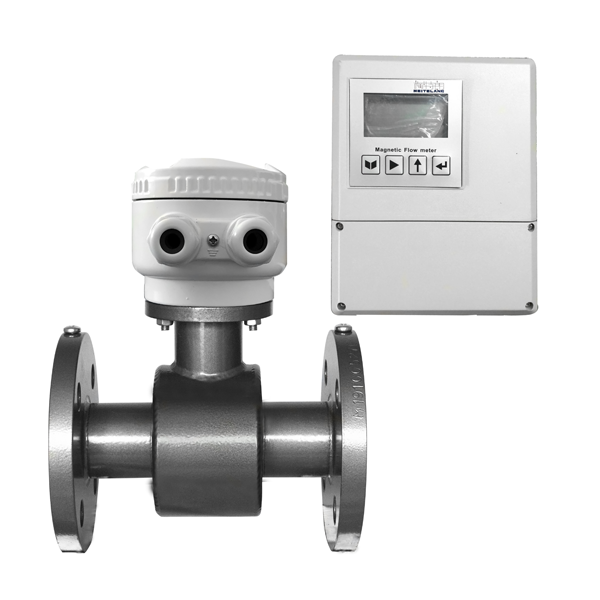
Remote Electromagnetic Flow Meter (MTF-F-200)
- No moving parts and low pressure loss help reduce wear in conductive liquid service.
- Bi-directional measurement works well for water, wastewater, slurry and many process liquids.
- Stable output options support monitoring, batching and plant automation integration.
- Material and lining choices can be matched to chemistry, temperature and sanitary needs.
- Accuracy
- Standard: +/-0.5 %, Optional: +/-0.2 %
- Measuring Range
- 0.3 m3/h to 125000 m3/h
- Medium Temperature Range
- PU, Neoprene, IR, FEP, PTFE, ETFE and PFA liner options
- Max. Process Pressure
- 100 bar (1450.38 psi)
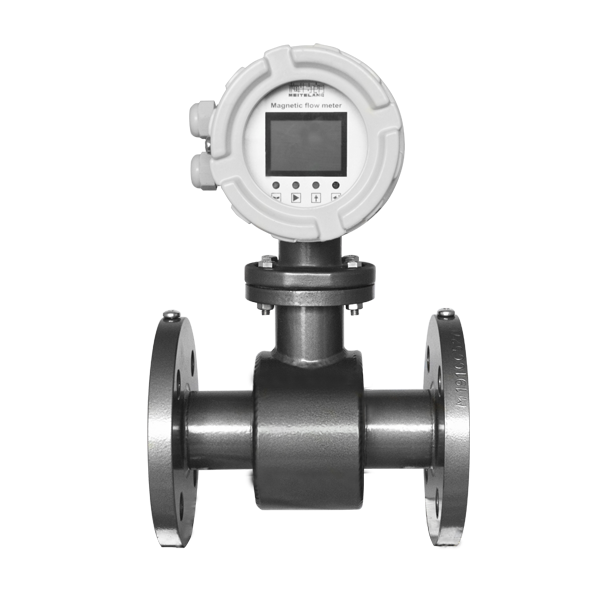
Flanged Electromagnetic Flow Meter (MTF-F-100)
- No moving parts and low pressure loss help reduce wear in conductive liquid service.
- Bi-directional measurement works well for water, wastewater, slurry and many process liquids.
- Stable output options support monitoring, batching and plant automation integration.
- Material and lining choices can be matched to chemistry, temperature and sanitary needs.
- Accuracy
- Standard: +/-0.5 %, Optional: +/-0.2 %
- Measuring Range
- 0.3 m3/h to 125000 m3/h
- Medium Temperature Range
- PU, Neoprene, IR, FEP, PTFE, ETFE and PFA liner options
- Max. Process Pressure
- 100 bar (1450.38 psi)
Working Principles of Electromagnetic Flow Meters
Electromagnetic flow meters operate based on Faraday’s Law of Electromagnetic Induction, which states that a voltage is induced when a conductive fluid flows through a magnetic field. The flow meter consists of a flow tube with electrodes that come into contact with the fluid and coils that generate a magnetic field perpendicular to the flow direction. As the conductive liquid moves through the magnetic field, an electromagnetic force (emf) is induced between the electrodes. This induced voltage, which is proportional to the fluid’s velocity, is detected by the electrodes and converted into a flow rate by the transmitter. The result is a highly accurate measurement of the fluid’s flow.
Benefits of Magnetic Flow Meters
-
High Accuracy
Mag meters provide accuracy levels around ±0.2% to ±0.5%, essential for precise measurements in sectors like pharmaceuticals. -
No Moving Parts
The design minimizes mechanical wear and pressure loss, reducing maintenance costs and enhancing durability. -
Versatility
They are suitable for various conductive fluids, including slurries, dirty water, and corrosive chemicals, making them ideal for industries like wastewater treatment and mining. -
Bi-directional Measurement
These meters can measure flow in both directions, beneficial in dynamic flow environments. -
Insensitive to Fluid Properties
Changes in fluid density, viscosity, temperature, or pressure do not affect the measurements, ensuring consistency under varying conditions. -
Low Maintenance
With minimal components in contact with the fluid, maintenance is limited to periodic calibration and electrode cleaning.
Common Types of Electromagnetic Meters
-
In-Line Magnetic Flow Meters
Installed directly into pipelines, offering the highest accuracy for precise measurements. -
Insertion Mag Flow Meters
Cost-effective for large pipes, providing slightly lower accuracy but easier installation. -
Battery-Powered Flow Meters
Ideal for remote locations where power is a concern. -
Sanitary Eletromagnetic Flow Meters
Designed for hygiene-sensitive industries like food and pharmaceuticals.
Search For Products
Need help choosing the right configuration?
Share the process medium, flow range, pressure, temperature and installation limits. MeasFlow will help compare the practical options.